

Ensuring a good homecare routine
For a lifetime of healthy teeth
Children’s visits to the dentist are incredibly important, helping to guide them from an early age and ensuring their teeth are clean, healthy and well aligned. But most important of all is their dental home care, with help from parents, and a tooth-friendly diet throughout childhood.
If you would like advice for adults, please see our Dental hygiene at home page.
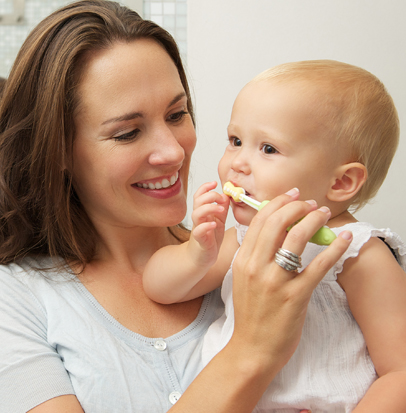
First teeth and early years brushing
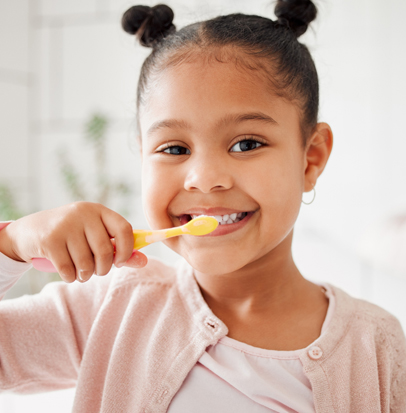
Once your child’s first tooth appears (usually around six months old) it’s good to start cleaning it, on all surfaces, using a gentle, circular motion. Twice a day is recommended, to help get them used to brushing from a young age. Make it fun if possible, and if it’s tricky at first, even just a quick clean is good progress!
- Use a small, soft toothbrush, or you might find wearing a ‘finger brush’ a little easier. It’s always important to buy children a good quality brush, labelled for their age. Especially for babies, the bristles need to be soft and the head small enough.
- Young ones tend to chew brushes, so it’s best to replace them when the bristles look squashed or splayed. In fact all toothbrushes or heads should be replaced at least every three months, for adults too.

A well-balanced, low-sugar diet
Once children start weaning it’s good for them to experience a wide variety of food. However, it is imperative to avoid sugar for as long and as much as possible.
- Unfortunately, it is hidden in many foods, so although difficult to avoid entirely, we encourage you to be as vigilant and disciplined as possible to help prevent your child developing a sweet tooth.
- We appreciate this can be tricky if they have older siblings, or when they go to children’s parties. We always encourage conversations with grandparents, as some have a tendency to shower kids with sugary treats! Knowing the impact this might have on their precious grandchildren’s teeth, they will hopefully fully understand the importance of a low-sugar diet.
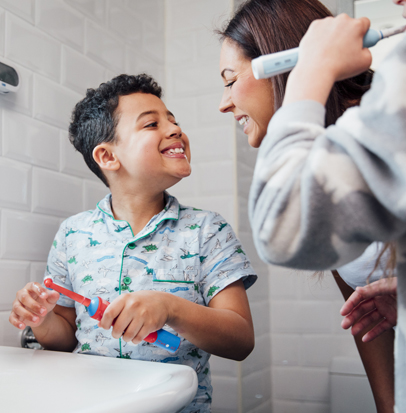
Electric tooth brushes
We would like children to be using an electric toothbrush from the age of 6 or 7, once their adult teeth start coming through, but it is fine to use one as early as 3 years old. These child-friendly versions tend to have smaller, softer brush heads and are less powerful. Again, quality counts, and there are plenty of fun designs to encourage and entertain them. Most adult electric toothbrushes are suitable from about the age of 10, but please check the recommended age.
If brushes have a two-minute timer, treat this as a minimum and ensure your child knows this too. A thorough clean may take longer (especially with tired or fidgety kids), but it’s best to pick your battles! If it’s occasionally a struggle, don’t worry too much. Keeping them happy as well as healthy helps instil good habits as they get older and become more independent.
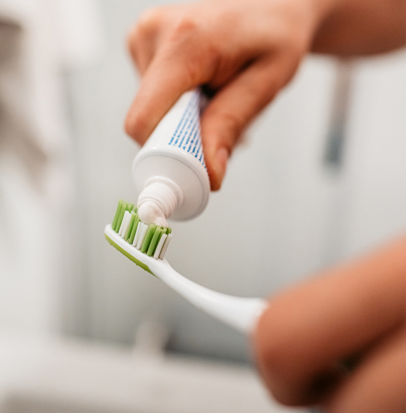
The right amount of toothpaste
Even from the very first brushing, it is advised to use a toothpaste containing fluoride and to brush twice a day, once in the morning and again just before bed. For babies and toddlers you only need a smear of toothpaste, no bigger than a grain of rice.
From perhaps the age of two you can increase the amount of toothpaste, but no more than the size of a small pea. It’s important not to exceed this, as some children tend to swallow it, and while fluoride helps strengthen and protect, ingesting too much over time can cause discolouration of developing teeth. As soon as your child is old enough, encourage them to spit out excess toothpaste after brushing, but never rinse with water as this washes away the protective coating.
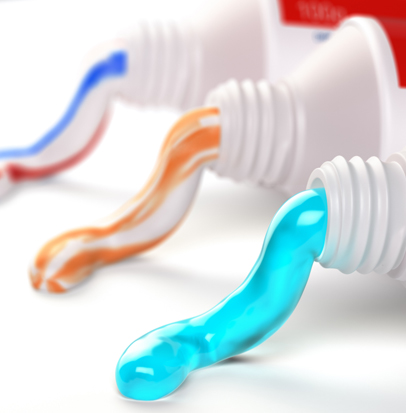
Choosing suitable toothpastes
Always use a good quality fluoride toothpaste labelled for your child’s age. It’s great to let them choose one featuring a favourite character, but we would definitely discourage fruit-flavoured toothpastes as it can be very difficult to break this habit as they get older.
Baby toothpaste tends to contain 1,000 part per million (ppm) fluoride, and is suitable for toddlers too. Toothpastes for ages 3+ are likely to contain at least 1,300 ppm fluoride, but actually those with 1,450 ppm are recommended for the best protection. They should definitely be using this strength from the age of six, and since 1,450 ppm fluoride is the normal adult concentration, there’s no reason they can’t share yours unless they find the taste too strong! It is best however that children don’t use whitening toothpastes, and they shouldn’t need those designed for sensitivity.
Bedtime brushing and drinks
Breastfeeding or a drink of milk before sleeping is a normal part of young children’s bedtime routine and healthy development. However, there is evidence that prolonging this beyond the age of 12-24 months can increase tooth decay.
As children become older, we wouldn’t encourage bedtime drinks other than water, especially once they have cleaned their teeth. When brushing after eating, at any time, it’s best to wait at least 20 minutes while saliva neutralises the acid from food and drinks – especially if they’ve had fruit or juice.
Children will understandably want to brush their own teeth, but it is aways best that a grown up helps finish off. Morning and night, parental supervision is encouraged for as long as possible, but naturally tends to tail off as children reach double digits. By then, they will hopefully continue to benefit from all the healthy habits you have taught them!
Ready for your child’s first visit to the dental practice?
A good dental homecare routine is essential for children, and we also encourage you to bring them with you to the dental practice from an early age. Our friendly team will give you and your children a warm welcome, and will be happy to answer questions or provide advice. You can read more about this on our First visit and beyond page.
When they are ready for their first appointment, please call us on 01689 664600 or use our online booking system. We look forward to seeing you!