
Endodontics at Caring Dental
Eliminating infection & preserving teeth
Endodontic procedures are performed to maintain the vitality of teeth, or to treat an infected, dying or dead tooth. In these situations it may be necessary to have root canal treatment, also known as root canal therapy or a root filling.
At Caring Dental, we understand that the thought of root canal treatment can feel daunting. However, modern techniques, advanced equipment and local anaesthetics make the procedure much more comfortable and highly effective.
Root canal treatment
Root canal treatment is a routine dental procedure carried out by dentists or endodontists, to retain teeth that would otherwise need to be removed due to infection or damage.
- A small hole is made in the tooth, so that the inflamed or infected dental pulp (a tooth’s soft interior) can be removed, and the root canals carefully cleaned and shaped.
- The space is then filled with a special material, and the tooth sealed with a filling.
- Finally, your dentist will usually recommend restoring the tooth with a crown or onlay, to provide protection and support normal function. This is because root filled teeth, especially towards the back of your mouth, tend to be weaker than normal healthy teeth.
With proper dental care, a root-filled tooth can potentially last a lifetime.
What are the causes and signs of endodontic disease or damage?
Dental pulp can become inflamed or infected if a tooth has deep decay, has undergone repeated treatment, is cracked or chipped, or even if it receives a blow without any visible signs of damage. Left untreated, this can lead to pain and pulp death. An abscess can develop once a tooth dies, and an infection then forms outside of the tooth, usually in the jawbone at the end of the root.
There may not always be symptoms, but common ones include toothache, pain when biting, prolonged sensitivity to hot or cold, discolouration or loosening of the tooth, or swelling and tenderness of the gum. If you experience any of these, please contact us for advice or to book an appointment.
Endodontics at Caring Dental
All our general dentists perform root canal treatments, but we are privileged to also have two experts on the team.

Dr James Aquilina
For specialised endodontic care we have Dr James Aquilina, a highly qualified and experienced endodontist, with a career dedicated to saving natural teeth through advanced root canal techniques. If a referral is needed, we will discuss this with you and arrange for Dr Aquilina to assess your case in-house.

Dr James Dodd
Dr James Dodd is a highly accomplished practitioner, and as well as being a general dentist, has undergone extensive postgraduate training in endodontics and restorative dentistry. He manages the majority of in-house referrals at Caring Dental for both routine and complex cases.
To arrange an endodontic consultation, please contact our reception team on 01689 664600 or book online.
Endodontics FAQs
Endodontology is the study and treatment of the tooth pulp. This is the soft interior of a tooth, comprising nerves, blood vessels and connective tissue. The word endodontic comes from Greek: endo, meaning ‘inside’ and odont, ‘tooth.’
Endodontic procedures are performed to maintain the vitality of teeth, or to treat an infected, dying or dead tooth. In these situations it may be necessary to have root canal treatment, also known as root canal therapy or a root filling.
An endodontist is a dentist specialised in the diagnosis, prevention and treatment of diseases and injuries of the dental pulp (the soft interior of a tooth). Their aim is to preserve the health of dental pulp, whenever possible, or remove it when the pulp cannot be saved due to irreversible disease or trauma.
While a dead or dying tooth may not always cause immediate symptoms, if it is left untreated there is a high chance of further infection, sooner or later, which can lead to sensitivity or pain, abscesses, and tooth loosening or loss. A root canal treatment greatly reduces these risks, and helps retain a tooth in healthy, functional and comfortable condition. Dealing with a problem tooth in a timely and planned manner can also avoid the sudden onset of dental pain, or the stress of emergency treatment, for example if you were away on holiday.
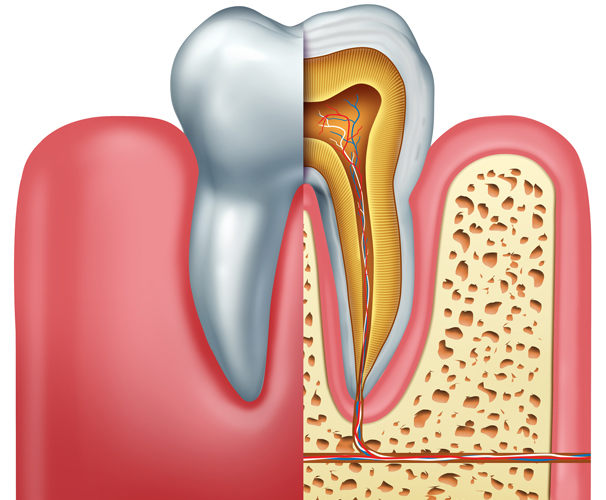
The visible part of a tooth is the crown, and beneath the gumline is the root, which anchors the tooth in the jawbone. Inside the root are the pulp chamber and canals (narrow channels), containing connective tissue, blood vessels and nerves, which provide nourishment and transmit sensation (such as temperature). The root canals extend down the to the tip of the root, and through a small root-end opening into the jawbone.
In most cases, root canal treatment is undertaken on a ‘dead’ tooth, in which case the procedure is normally virtually pain-free. On occasion, when a tooth is very inflamed or infected, it can be difficult to fully anaesthetise the tooth, but every effort will be made to ensure the treatment is as pain-free as possible.
Modern techniques and local anaesthetic help make the procedure as comfortable and painless as possible. We always apply numbing gel to the area first, followed by a gentle local anaesthetic to fully numb the area.
For the vast majority of people, it is normal to experience some mild tenderness or discomfort for a few days, which can usually be managed with over-the-counter pain relief. Occasionally, some patients may experience increased pain, especially if the tooth had a severe infection before treatment. However, this would usually settle, with the possible use of antibiotics. If you experience severe pain or swelling, please contact us.
Please note that numbness from the anaesthetic may last for a few hours after treatment, so it is advisable not to eat until feeling is restored.
1. Numbing the tooth
We always apply numbing gel to the area first, followed by a gentle local anaesthetic to fully numb the area.
2. Isolating the tooth
A rubber dam is placed over the tooth. This is a protective sheet that keeps the tooth dry, which is essential for successful treatment, prevents bacteria from the mouth contaminating the root canals and ensures patient comfort, stopping water and disinfectants from going into the mouth.
3. Accessing the tooth and removing infection
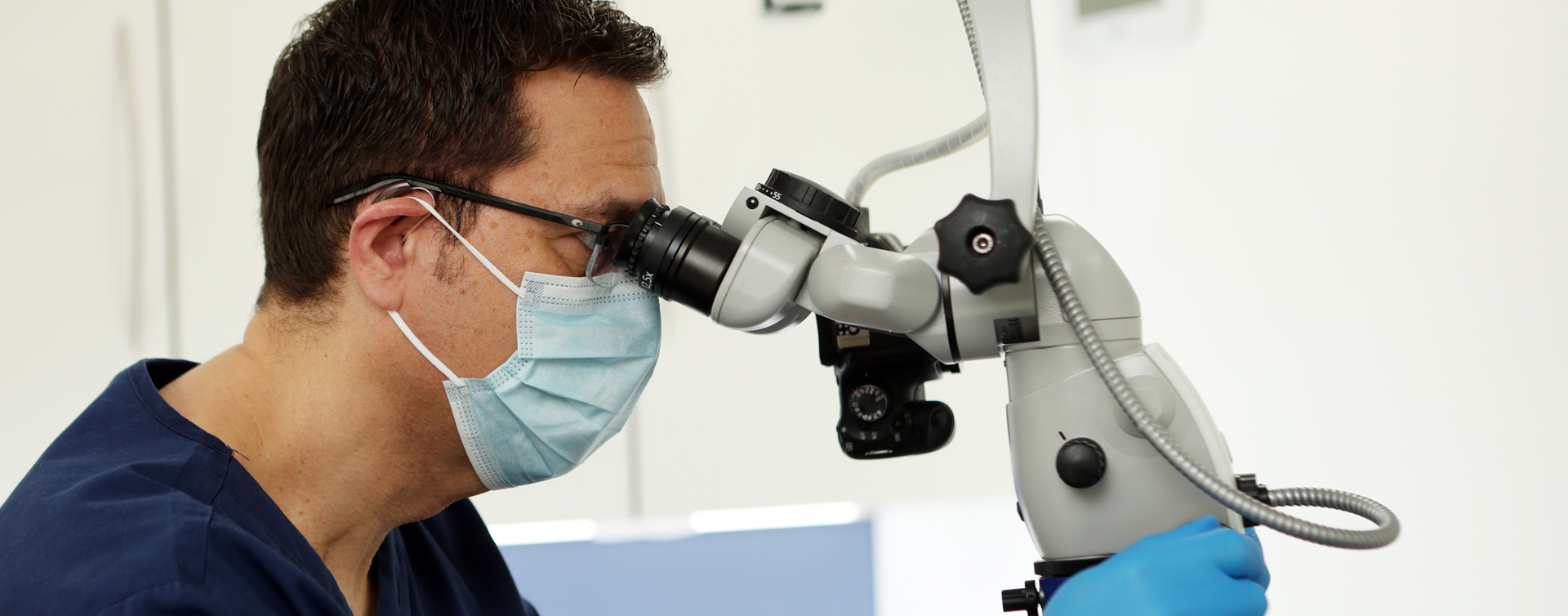
A small opening is made in the tooth to reach the infected pulp inside. Using a dental microscope, we carefully remove the damaged pulp tissue and any bacteria present.
4. Cleaning and disinfecting the root canals
The root canals are thoroughly cleaned and shaped to remove all infection and allow for an effective seal. We use advanced irrigation techniques to disinfect the canal spaces.
5. Filling and sealing the root canals
Once cleaned, the canals are filled with a biocompatible material (gutta-percha) to seal them and prevent reinfection.
6. Monitoring progress
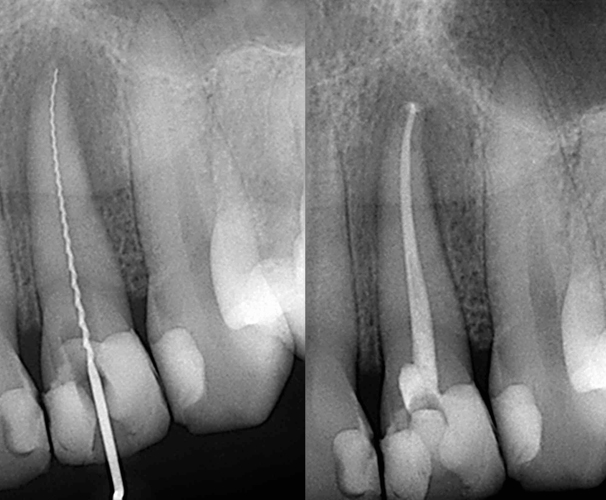
Throughout the treatment, it is usually necessary to take some additional radiographs (X-rays) to determine that the canals have been fully prepared and cleansed, and at the end of treatment to confirm that the root filling material has completely filled the entire canal system.
7. Restoring the tooth
A temporary or permanent filling is placed to seal the root filling in and make it ‘watertight’. For back teeth, we recommend a crown or onlay to strengthen the tooth and protect it from fractures requiring further appointments.
After a root canal, although the tooth is still functional it is also weakened. In most cases, a crown or an onlay is recommended to protect the tooth and restore full strength and functionality. This is particularly important for back teeth (molars and premolars), which experience more pressure from chewing.
Most root canals can be completed in a single visit, with the procedure typically taking 1½ to 2½ hours. We will make you as comfortable and relaxed as possible during treatment, and take short breaks as needed. In some more complex cases, two or more appointments may be necessary, depending on the severity of infection or any complicating factors.
At Caring Dental we are very experienced in treating nervous patients, so please let us know if you feel anxious or have any concerns, and we will be happy to discuss ways that we can help you. For more information, please call our friendly reception team or read our guidance for nervous patients.
There are occasions where a tooth can’t be saved or completing a root canal treatment may not be advisable or possible. Sometimes this may only become apparent once the procedure has been started, in which case the tooth will be left with an antiseptic dressing inside it and a temporary filling placed. In such cases, your dentist will then discuss alternative options and next steps with you.