
Tooth extractions at Caring Dental
Specialists in routine and complex procedures
At Caring Dental, we always do our utmost to preserve teeth, and only perform extractions when absolutely necessary.
We completely understand that having a tooth removed can be an unpleasant prospect, and if an extraction is the only remaining course of action, your dentist will fully explain the reasons, and how we can make the procedure as comfortable as possible for you. Happily, there are also a number of restoration options if you would like to replace an extracted tooth.

When are tooth extractions needed?
Extractions involve the complete removal of a tooth and its roots. They are only carried out when a tooth can no longer be saved by other treatments or restorations, or if it is beneficial for your other teeth or overall dental health. For example:
- Infection – if a tooth is severely infected, and cannot be saved by other treatments, such as a root filling, then extraction may be the best option to relieve pain and stop the infection spreading.
- Broken teeth – a tooth may be beyond recovery or repair, due to decay, damage, or dental trauma, such as an accident or sports injury.
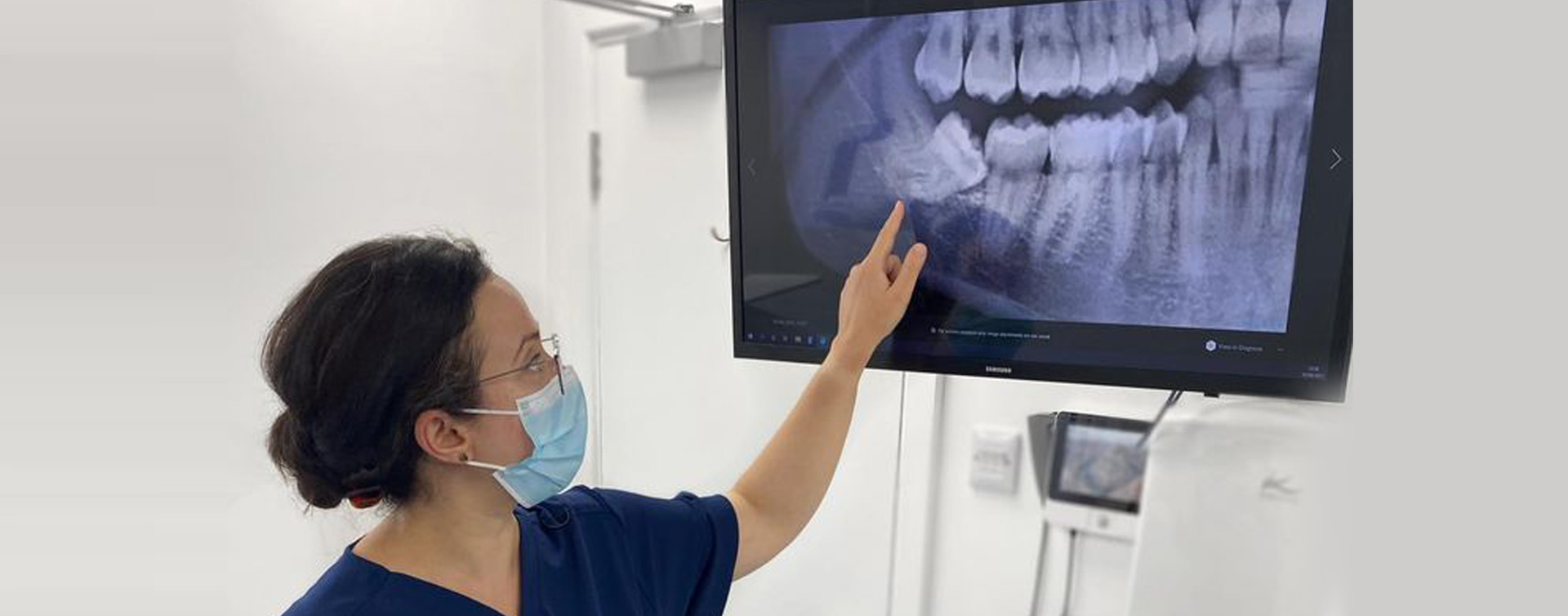
- Impacted wisdom teeth – these are the last to come through, and sometimes there isn’t enough space for them to emerge without impacting on other teeth, which can cause pain, infection or decay.
- Baby teeth – if any primary or ‘deciduous’ teeth have not fallen out naturally, removal may be necessary to allow a permanent, adult tooth to emerge and grow.
- Overcrowding – extractions are occasionally necessary to make space for other teeth, or to allow movement, for example if you are having clear aligners fitted or orthodontic treatment.
Types of Extraction
Emergency extractions
Dental emergencies can arise unexpectedly, and if an extraction is urgently needed to ease pain and distress, we will always do our best to book a patient in as quickly as possible. For advice or appointments, please call the practice on 01689 664600. For more information, please visit our emergency treatment page.
Routine extractions
After your initial consultation, and explanation of the treatment plan, most extractions are performed at our dental surgery as a routine procedure, in a single visit.
Treatment is carried out under local anaesthetic, so you will be fully numb, and other than some movement and pressure there will not be any pain. For particularly nervous patients, we can also offer sedation.
Of course, as with any minor dental surgery, there is some discomfort expected following the procedure, but this is manageable with over-the-counter painkillers and usually settles down quite quickly.
Complex extractions
Sometimes the shape, position or condition of a tooth, or its root, can present complications that require a more specialised approach. Likewise, for patients with complex medical histories, or those taking particular medications such as anti-coagulants (blood thinners), it is usually advisable to receive specialist care.
At Caring Dental we are privileged to have the services of Linda Murtadha and Bizhan Shokouhi, both specialist oral surgeons. They are highly experienced and particularly skilled in dealing with complex extractions, buried roots and impacted wisdom teeth.
If a surgical or complex extraction is required, your dentist will explain this during your consultation and arrange a referral for you to see Linda or Bizhan at our dental practice in Orpington, Kent. For more information, please visit our complex extractions page.
Advanced healing technique
At Caring Dental, our specialists are equipped with the latest technology, and are experts in advanced techniques for treatment and recovery.
Using a revolutionary Platelet-Rich Fibrin (PRF) procedure, a patient’s own blood cells are used to improve healing following extractions, including wisdom teeth. This can also help to preserve bone if a patient wishes to have a dental implant to replace the missing tooth.
Restoring missing teeth
After an extraction has healed, in time you may like to consider options to fill the gap. It is almost always preferable to replace missing teeth than to leave a gap, which can lead to bone loss and other issues.
If you wish, your dentist will be glad to discuss the benefits of restoring a missing tooth and explain the different options, for example a dental implant or bridge.